
Texas Tech University Athletics

On the Course with Women's Golf
October 08, 2011 | Women's Golf

The view from the patio on the 18th green at Glen View Club.
October 8, 2011
LUBBOCK, Texas
Mark Twain famously said, "Golf is a good walk spoiled."
As I walked along with the No. 17 Texas Tech Women's Golf team during their practice round on Sunday, October 2, at the Glen View Club in a place called Golf, Illinois, that quote kept rolling around in my head and was a precursor for many thoughts to come over the next three days.
(To better understand my perspective, a reader should know that I have worked in sports for many years, have a good knowledge of coaches and team dynamics, and have watched golf on television since before Tiger Woods appeared on the Mike Douglas Show. (Google it, young ones.) I even had the great fortune of spending a few years working as an administrative manager at a pair of municipal golf courses. My father was an avid golfer and I have fond memories of Sunday afternoons spent accompanying him to a course or watching major events with him on television. All that to say, I have a slightly better than average knowledge of the sport of golf, despite never having played it much.)
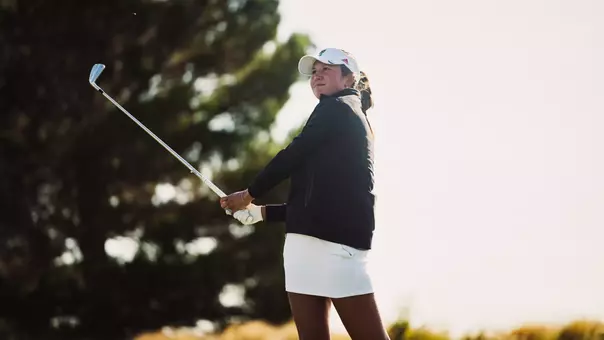
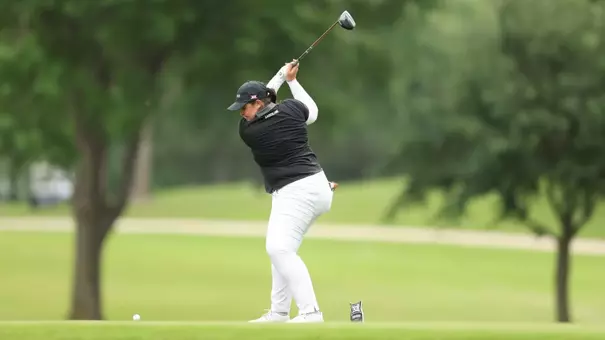
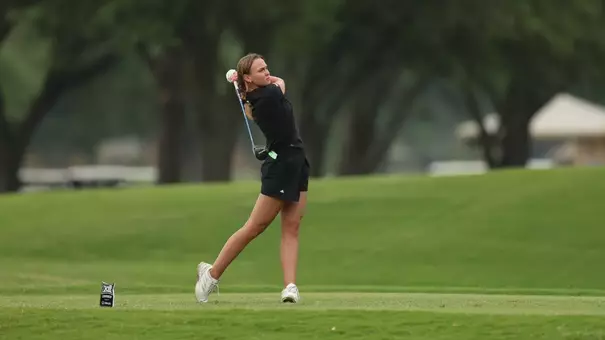
So there I was last Sunday walking with these five incredible collegiate golfers, Hannah Arnold, Elin Arvidsson, Gabby Dominguez, Kim Kaufman, and Beverly Mendoza, and their coaches, JoJo Robertson and Emily Kuhfeld--both outstanding former collegians as well--on one of the nation's most picturesque urban courses thinking more deeply about the sport than I ever had.
...What makes it a great golf hole when you're a really good golfer and pretty much always hit it where you want?
How does an elite athlete keep the mental confidence that's essential to the game, but still spend committed time practicing from bunkers and roughs acknowledging that you'll end up spending time during competition there?
How long does it take a person to learn all the calculations for things that are going on in your heads that most of us have no idea is happening?
If a squirrel knocks your ball into the cup does it count?
How long does it take a person to become accustomed to standing up for such long periods of time?...
(If you're expecting solid answers to all of those, you might want to stop reading. However, I will get to the squirrel one.)
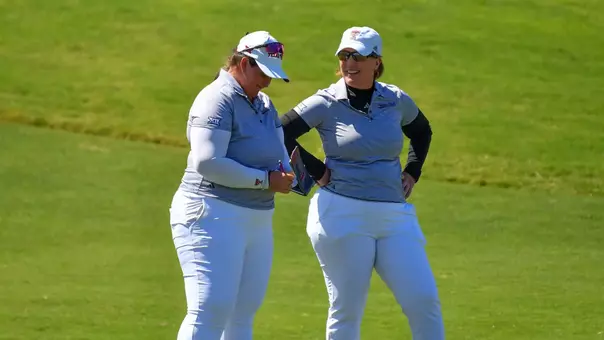
While watching Emily carefully map the slope of one of the greens with a level and then precisely diagram measurements in a book which I previously assumed was for noting scores or maybe scribbling grocery lists, I began to notice something interesting about the language they used.
These golfers use words like: loft, slope, compression, angle, fade, grain, and lag as math terms to calculate some advanced golf equations. And then, they understand each other when they do. These notations help them determine how they adjust for factors like the wind, for example. When they stand at a tee box and toss that little bit of grass in the air, there's an actual mathematical factor that a golfer mentally notes which may create an adjustment in what they do. (All coaches of every sport love to say make an adjustment, by the way, it just turns out that golfers use some real math to do it.)
"I even calculated about four feet for my 7 iron on that approach, because of the breeze, the hill to the right and then the ridge down the front, so I was pretty sure it would carry," somebody said something like that at one point. Clearly these people really focus on details and thoughts of, "I need to pick up some milk on the way home" don't enter their minds--even during practice rounds. "Of course, they are elite golfers," I may have actually said aloud.
Which led me to an internal discussion of the word: par.
A cursory review of a dictionary while on a golf course (thank you, iPhone) yields: "An amount or level considered to be average; a standard; in golf, par is defined as perfect play without flukes and under ordinary weather conditions." This definition led to research about whether the lay person term came first or the golf one. Par was officially added to the golf lexicon in 1911 and the word, itself, can be traced back to 16th century Latin (thank you, Wikipedia), and actually has little to do with the golfing term.
From an amount or level considered to be average to perfect play without flukes ... this thought followed me for many holes, but after a while it was drowned out by thoughts about my feet, which had gotten wet early in the day upon our arrival and were now quite unhappy with me. Looking up as Kim, Gabby, Bev and Elin walked to the final green during the practice round with their golf clubs on their backs or in carts that they had to push up and down all those slopes, and then watching Hannah limp along with increasing soreness in her foot, I felt shame. Then remembered that I was, after all, old enough to have watched the Mike Douglas Show and the guilt eased as I realized I rarely have to stand for 12 hours a day.
Thoughts about the word par were still on my mind the following morning and it only took me another 10 hours on the course to figure out exactly why. Admittedly, I was excited to walk with the team especially during the first round so the first few hours my thoughts were more preoccupied with noticing the players' and coaches' routines, the scenery, the volunteers and their set up and the course workers' operations. And, I had a job to do capturing pictures and videos, so my first several hours were spent focusing on my work while the players focused on theirs.
Usually when I follow one of our golf teams, it's via my computer on the Golfstat.com site which updates scoring results every three holes for every collegiate tournament. Somewhere during the opening nine holes on Monday morning, I realized that it was much easier to keep up with what was going on at a golf tournament by being in my office than it was by being on the course. When a colleague texted to ask, "How's it going," I honestly replied, "I have no idea, maybe you could tell me?" And, it wasn't just my amateur status as a golf tag-along, JoJo told me early on that she can tell generally how a player is doing even from a distance, but that she relies on the technology of Golfstat through her phone to keep up on how the team is doing.
Fascinating. If you're any kind of a sports fan or have coached any level of anything, you know that the notion of knowing where you stand during a competition generally factors into any adjustments you want to make as a coach. But, here, on the actual field of play that they let fans like me trudge along during competition, a coach has very little to do with actually influencing an outcome.
Tech finished the round in fairly good shape (301) after the first 18 with the team in a tie for fifth. As we walked up to the final hole of the first round, it hit me that we were going to do the whole thing again. Right now. A quick stop at the rest room and each player would return to play her second 18 holes having grabbed a pre-packaged boxed lunch from the club house. Maybe five minutes separated the first round from the second. (And, what if they don't like lettuce on their sandwich, they don't get a choice?)
Silly me. I thought we'd at least get an hour break to regroup, eat a nice lunch, put our feet up... But, of course, this is a sport that battles daylight, so everyone has to keep moving. Wisely, I put all my camera gear back in the van and decided to take off walking the first nine of second round. While I was interested in watching the overall operation of the tournament, the appeal of the patio chairs above the 18th green were my true motivation.
As I stopped to review the scoreboard that is carefully updated by a calligrapher outside the clubhouse... the thoughts come back to me... par... average... Bev had shot a 4-over-par 76 in the first round. Mendoza's card was the third-best of the morning for Texas Tech... And, that's when it hits me: "A 76 is 4-over-par? I know people who have golfed four times a week for 50 years and have firing sub-80 still on their bucket lists?" again this thought spills from my head to my lips and the nice gentleman calligrapher says, "Exactly, my dear. These women are anything but average."
We, the lay sports fan or occasional golfer, may have forgotten the distinction in the definitions of the word par from our common use to the extraordinary one used for golf. PERFECT PLAY. In the Glen View Club case, perfect play is measured at a 72. The 301 the team scored the previous round was 13 strokes from perfect play... and it had them in a tie for fifth. Which means when you're trying to be elite, among the best, that isn't nearly good enough.
I caught up with the team as they began their 28th hole of the day and already knew that things hadn't been going well. The coaches had made the wise decision to have Hannah ride in the cart for the second round once they had been assured she could resume her play for the final round the next morning. This meant that all four scores remaining would count. (In collegiate golf, five players shoot but only the best four scores count.) Two bad rounds by players meant all those scores factored in, which meant the team would fall mightily by the end of the day. Watching any of them struggle was really difficult, because when you know these student-athletes, how hard they work, how much time they spend diligently working to be excellent at everything they do, and just how special these people are, you really care about them.
"We can't do anything about a rough shot, a tough break or a bad round of play," JoJo said to me as she could sense my unease. "All we can do, even as coaches, is help them learn that they have to live in every single moment to be a successful golfer. A great golfer simply can't dwell on any of it, they have to let the bad shots or tough breaks go immediately. Once they figure that out, we get to the beginning of becoming elite."
The following day after a too-quick rest and another early wake-up call, the team went back out for their final round. By this point, knowing it was only going to be 18 holes to walk, I felt light as a feather and eager to see how the team bounced back. And, I was treated to something remarkable from the team: the five players finished the tournament with a 290 card on the final round. Two shots shy of team perfection! Both Kim and Elin shot a 1-under par. Kim's stellar play throughout the event (73-71-71 = 215, or 1-under par) landed her in third individually, one tiny stroke behind the leaders. For Elin, the 1-under was a 13-shot improvement from the round before and was her collegiate best finish. (Yes, it's only her second appearance as she is a freshman.)
Mark Twain, perhaps less famously, said: "It's good sportsmanship to not pick up lost golf balls while they are still rolling."
I thought about how much I had learned over the course of the three days and chuckled recalling that saying and praising myself for not committing any grievous newbie errors during the event. That led me back to the squirrel question.
If a squirrel knocks the ball into the cup does it count?
JoJo had answered it for me the day before. No it wouldn't because the squirrel is an "outside agency" and then she reassured me that it also wouldn't count against you if the squirrel knocked your ball out of bounds. My mind was relieved, but after we raced to the airport to return home and got through security safely to our gate, I spent some time researching the rules of golf and found this answer from a blog Q&A from some pros:
"A bird picked up my ball on the green and dropped it into the water! What is the ruling?"
"My answer to this question depends on your answers to some questions.
#1: Was the ball at rest or in motion? If it was at rest, Rule 18 covers this. The bird is an "outside agency" as defined by the rules. Rule 18-1 states that 'if a ball at rest is moved by an outside agency, the player shall incur no penalty and the ball shall be replaced before the players plays another stroke.'
If the ball was in motion, then we must go to Rule 19.
#2: If the ball was in motion, from where was it played - on the putting green or off? If your ball in motion was picked up by the bird after a stroke on the putting green, we would go to Rule 19-1b, which states, 'If a ball in motion after a stroke on the putting green is deflected or stopped by ... any moving or animate outside agency except a worm or an insect, the stroke shall be canceled, the ball replaced and the stroke replayed.'
However, if your ball in motion was picked up by the bird after a stroke from off the putting green, Rule 19-1 would be the appropriate place to look. It states, 'If a ball in motion is accidentally deflected or stopped by any outside agency, it is a rub of the green, no penalty is incurred and the ball shall be played as it lies.' The typical response that goes along with this is 'bad luck has to start somewhere!'"
My eyes rolled back in my head and I powered down my phone with the following two thoughts: why does anyone even try to understand this game in the first place; and, why don't worms and insects count as outside agents?
Mark Twain got it mostly right, by the way. I would say this: Golf is a good, LONG walk spoiled.