
Texas Tech University Athletics
Catching Up with Coach Marsha Sharp
July 22, 2011 | General
July 22, 2011
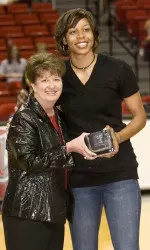
LUBBOCK, Texas - Whether as an ambassador for Texas Tech, women's basketball, or various coaches associations with whom she has worked, Head Coach Marsha Sharp has continued to serve the university with distinction since her retirement from coaching at the end of the 2006 season.
She has held executive leadership positions with a variety of national and local boards and organizations, including serving as the President of the Women's Basketball Coaches Association, as the President of the Board of Directors for the YWCA Lubbock and as Executive Director of the Kay Yow Cancer Fund. Coach Sharp is also a sought-after public speaker on issues such as leadership as well as being a founding member--and the namesake--of the Marsha Sharp Leadership Circle at Texas Tech.
When former North Carolina State basketball coach Kay Yow founded the charitable organization of coaches which now posthumously bears her name, Sharp was quick to lend her support to her longtime friend and colleague and immediately recognized the potential value and power of the collective will of the group. Over the past few years under Sharp's leadership, the foundation has raised $4 million for the research and treatment of women's cancers with the support of coaches and athletes from more than 1,500 schools.
Recently, she sat down with Devan Cook at an event held in Oregon and discussed key portions of the effort:
The Kay Yow Cancer Fund has brought together coaches from across the nation to work collectively in the fight against women's cancers. Besides Yow's personal past as a coach, what do you think makes this fund uniquely important to coaches? Is there a correlation between the experience of coaching and a cause like this one?
"I think so, and I think Kay viewed it that way. She always said she was fighting against one of her strongest adversaries when she fought against cancer--that it was similar to trying to win in athletics. The coaches had an amazing respect for Kay; she may have been the most beloved member of our profession. She was always concerned about everyone else, and had such a positive outlook. She wanted a nation of coaches united for this cause. Because of who she was, a passion grew to keep her legacy alive, and this fund is a way for coaches to gather their energy and get together to do something (of value)."
As someone who has worked with female college athletes as well as directing the Cancer Fund, what steps would you recommend women take towards preventative care and maintaining a healthy lifestyle?
"It's the same things we hear all the time that some of us do better than others: diet and exercise. Certainly (genetics play a part), but I think you can overcome genetics by your lifestyle. I think this is where a nation of athletes and coaches can lead the charge because they have already worked to maintain their health through strengthening and conditioning in order to compete. If we take that same concept and realize we are competing against (disease) our whole lives, then it's a great way to gather people to the cause. You have to look at it as trying to win the greatest competition you'll ever compete in."
When did you realize you wanted to be a coach?
"I didn't until I was in college. I thought I was going to be a lawyer! I went to a school called Wayland Baptist and it was one of the only places in the country where women could go at that time and play basketball. They had a great team, they were called the Flying Queens and they were one of the best in the country. One time they had a 100-something winning game streak! I wasn't good enough to make the Queens, but they let me coach the freshman team when I was a junior. I learned so much about basketball and just fell in love."
What's the greatest piece of advice you ever received?
"My dad, who I lost in 1999 to Alzheimer's--another battle that needs to be fought--always said the neatest thing you could ever do is to always leave things better than how you found them. Relationships, people you meet walking through your daily world, projects you're working on, your occupation--if you try to follow that concept every day you will do some good things in your life. I really cherish that advice."
What's your proudest achievement?
"Anyone who has ever coached a sport and loves the game can tell you that there's nothing like winning the National Championship." [Coach Sharp led the 1993 Lady Raiders to the national title.]
"That was the most amazing experience professionally I've ever had. But my personal belief is that (you should take advantage of) whatever you are able to do because of the platform you have. So because of the success in my career, (for me) to have the opportunity to be involved with the Kay Yow Fund is a proud achievement. That's what I'll look back on and say how fortunate I was to be able to have been a part of."
What are some of the things the Kay Yow Cancer Fund does to raise money?
"The biggest fundraisers we have are the basketball games in February. Recently we've been reaching out and having more grassroots participation in high schools, some junior highs and in other sports. College men's teams have also started to participate. We had over 1500 schools participate last year--the goal is the get to 5000."
What your favorite thing about the Lone Star state?
"I love Texas. I love the hardworking, farm-type people in west Texas. The big, open terrain. And you can't argue with the steaks and the barbeque!"