
Texas Tech University Athletics
A Duty Fulfilled
November 15, 2014 | Football

Maria Cruz will graduate in May with a degree in business management with a 3.5 GPA.div> November 15, 2014
BY NICK KOSMIDER
Special to TexasTech.com
Like many folks who arrive in Lubbock for the first time, Henry Cruz and his wife Maria Flores were impressed by the support the city had for Texas Tech University and its athletics teams when they moved here a little more than two years ago.
"Everything is Guns Up, Texas Tech-oriented," Cruz says. "It's definitely a change from the places we've been to."
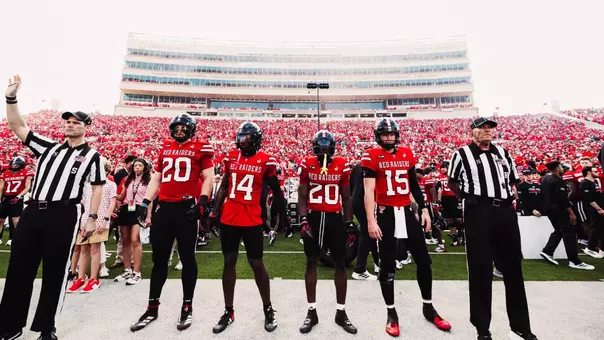
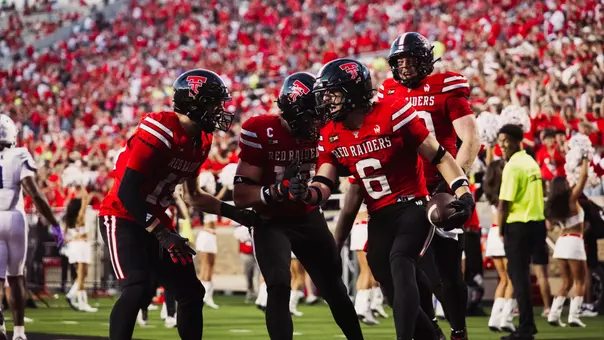
It didn't take long for the couple to discover, though, that the same passion Texas Tech fans have for every Red Raider team extends far beyond the playing field. When the Red Raiders host Oklahoma on Saturday, the football contest marks a day of Veterans Appreciation, a time to honor all those who have made countless sacrifices in the name of protecting the freedom of Americans everywhere.
But true appreciation can't be expressed at one game or on one day. It's a daily commitment to providing support and gratitude for military members and their families. It's a process that the Texas Tech community understands and treats as a responsibility.

Just ask the couple that has dedicated their lives to military service.
"At Texas Tech, I think it's amazing how much care the university has put toward military members, especially those who have been in combat zones like myself and others," says Flores, who retired several years ago after a 20-year Navy career and is now a business management student at Texas Tech set to graduate next summer. "Also, the family members, they play a key role in the support they give the family member. Embracing the military and letting them know: `We're here for you. We want to help you adjust back into a civilian lifestyle, but we also want you to succeed in your transition into the civilian world.'
"There are psychological and mental things you're dealing with, as well as physical, so the openness and caring and empathy that is shown at Texas Tech is wonderful. It helps you grow as a person and also to be a productive member in society."
Flores spent much of her Navy career aboard aircraft carriers. In 1994, she was among the first women in Naval history to deploy as a crew member of a U.S. Navy combatant ship when she left on the U.S.S Dwight D. Eisenhower for a six-month deployment.
"We made history there," Flores said. "It was only a small group of us at that time."
The military helped Flores travel the world. It helped her meet her husband, currently a Navy recruiter. The two were working together in the engineering department aboard the U.S.S. Theodore Roosevelt in Virginia when they met.
But like many veterans across the country, adjusting to life outside the military provided challenges at first as she attempted to transition back into civilian life.
"One of the biggest struggles was structure," she says. "When you're in the service, everything is so structured for you. It's hard to get back to not having that structure. You're getting up at a certain time, eating a certain time -- you just have everything on a tight schedule. When you get all this freedom, you kind of feel lost because you are used to having all this structure. For many of us in the civilian sector, that structure isn't there. It's more flexible, so you have to adapt to that and also adapt to people who don't know that environment."
What Flores found at Texas Tech was a tight-knit community that understood exactly what she was facing.
When former President George W. Bush spoke at the Bush Institute's Empowering Our Nation's Warriors Summit earlier this year, he said, "Veterans account for about three percent of the higher education population, and many report feeling isolated from their classmates and or professors. There are some great institutions that are doing good work in attracting veterans and making them feel at home."

Texas Tech was one of the three institutions Bush then named as leading the way in their support for veterans, and it quickly became easy for Flores and Cruz to see why.
"They are willing to go the extra mile to set up programs and foundations where you can go if you need help emotionally, psychologically or even health-wise," Flores says. "It's wonderful how much this city embraces the military and lets them know, `We appreciate the freedom that you fight for.' A lot of us take it for granted and they don't understand that sacrifice that is made. It's really wonderful here. I wish it was really spread out throughout the United States, but it's not. I wish it was."
Flores credits Texas Tech's Military and Veterans Programs in helping her not only adjust to life as a civilian, but thrive on a new path. She will graduate in May with a degree in business management -- which she believes she can achieve with a 3.5 grade-point average -- that will help her thrive in her career in industrial management.
Now she is helping other veterans at Texas Tech reach their own, newly designed goals as a worker in the MVP office.
"What I enjoy most about the work is being able to help other veterans transition from military life to civilian life," she says. "I remember when I first got out, it was really tough for me, after 20 years of service, to transition into civilian life and then go to school. I just feel compelled to give back and let them know that it is possible to transition from one lifestyle to another, and you are able to start a new career and find new goals and be productive in society."
As Flores works her way into a second career, her husband continues to help young people in Lubbock discover a potential new path of their own. Flores attended Temple University after graduating high school, but he didn't have the financial means to complete his college journey. So he joined the Navy and has developed skills and traits that he knows will set him up for a lifetime of success.
"The enjoyment I get is changing lives every day, seeing young men and women actually grow up as people," Cruz says. "The only way I can actually do this job is to relate to some of the people that come to us every day. They're going to school, can't afford to finish it. Or some people who can't afford to go to college who were good students in high school. Their family doesn't have the monetary means to get to the next level, so it's all about giving them the means to take the next step to that level. That's the biggest thing that I have that helps me relate to them. The biggest part about the job is being able to relate to all types of people."
Being able to relate to students and families from countless diverse backgrounds is part of what has set Texas Tech apart, and that is especially true of its work with military members, veterans and their families.
"I think that's what we appreciate most," Cruz says, "that they appreciate the service that we do every day."