Texas Tech University Athletics
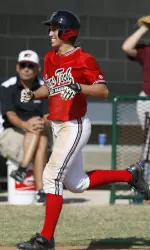
Softball 101 - The Top-10 Reasons We Think Softball is Better than Baseball
January 09, 2008 | Softball
Jan. 9, 2008
LUBBOCK, Texas - With apologies to David Letterman and his now-back-to-work staff of writers, Texas Tech softball would like to offer its own version of a top-10 list. We're going to call it, "The top-10 reasons we think fastpitch softball is a better sport than baseball," and remember, we think baseball is pretty fantastic!
Now we know that title isn't very clever or funny or maybe even interesting, (but then, Letterman's often isn't any of those things either!) but we'll do our best to entertain you if you give us the next few moments and let us carry on with your attention. And, here's a promise from us, at no point in this top-10 list will we mention the word: steroids. (Okay, we just did there, but it was to tell you that you will not read the word again in our list, it simply isn't a factor in this discussion.) In typical fashion, we're going to start with No. 10 and work our way up. So, here goes and thanks for reading.
10. There is a predominant focus on the fundamentals of the sport. Softball players still hit a cut-off when they're making throws from the outfield, catch a fly ball with two hands and will lay down a sacrifice bunt whenever the coach asks them to do so. Doesn't matter if you lead the nation in home runs, you may be asked to give up an out to advance the runner and let the teammate behind you get the simple base hit that knocks in the winning run and we think that's not only good fundamentals, it's downright sporting.
9. There is a complicated re-entry rule in softball, but we can boil it down quite simply here: Any starting player may re-enter a game once. What does that mean to the game? It means that we can carry fewer players on our roster (and do less laundry) and use experts at certain skills. Using a pinch hitter or a pinch runner doesn't mean you have to move your best defender or hitter to the bench because you've used a replacement. It means that you haven't really knocked the opponent's best pitcher out of a game just because the other coach takes her out. It means that a good softball coach will typically use everyone on the bench in their area of strength except perhaps that one final player who may have to be inserted into a game in the event of injury. It also means that every parent or boyfriend needs to stay for every inning!
8. This one is quite simple. It's the same great game as baseball in less than half the time. Really! While there are only two fewer innings played (seven instead of nine) than baseball, the fact that a runner can't lead off first means there are no annoying throws down to first base to keep a runner close. (Now, we love a good pick-off, but when it's 34 degrees and the wind is blowing and it's drizzling slightly, do we love all those throws to first to keep the poor frozen guy close to the bag? Yeah, we didn't think so.) And, none of that means that there isn't stealing in softball, there most certainly is. It means that most softball games last two hours, and, while it's true that some games may go to extra innings, it's also true that there's even a plan for that for when it gets too long for even a player's mother to care. That plan is called the international tie-breaker and it can make an otherwise really close game suddenly very explosive. (Which is how two years ago Tech lost to No. 17 Nebraska, 10-4, in the 10th and everyone leaving the ballpark was saying how close it was and how those who simply read a box score were scratching their heads at those who kept insisting it was an amazingly-close game!)
7. Speaking of close, a softball field is much smaller than a baseball field which means you get to sit really close to the action and you'll be able to see, not only the ball on every play, but maybe even the sparkle in the eye of the fielder who is making the play. The backstop is only 25 feet behind home plate. When that potential game-tying run is scored? You'll really, actually know if the umpire made the right call and he can hear you when he didn't!
6. Then there's the hustle. Softball players still hustle to their positions between innings and off the field after each inning as if they're really excited to get to bat.
5. And, while you may have heard of a designated hitter (and are maybe even old school enough to think that's not real baseball) softball has a position called a designated player. Here's what's really funny about it: ask 100 players, coaches or scorers to explain the designated player and you'll get 100 different answers about what's different about it from the DH in baseball. So, what is different about it? The bottom line is that because of that re-entry rule (remember, our No. 9 above?) even a DP, if she starts a game, can be removed and then can re-enter the game one time. And, a coach can--even in the middle of the game--choose to play without that position for a while and then re-insert it (and that's where it gets starts to get crazy). There are two really important things about it to know: 1) coaches use it to be certain that their very best offense is used, making the game much more interesting for a fan; and 2) no one will ever, ever ask you to define the DP for any reason when you come to a game!
4. The Mercy Rule. (Some of us think this is the greatest rule in all of sports.) In fastpitch softball if a team is ahead by more than eight runs after five complete innings of play everyone gets to go home. We believe every sport should have a similar rule. There comes a point in a game where it's just ridiculous to continue playing--whether you're winning or losing--and the fans knows it. Softball has defined that as eight runs after five.
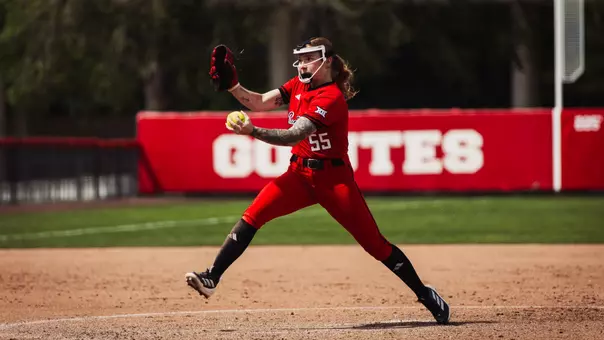
3. Pitchers don't just throw hard. In fact, the best pitchers can change the speeds of their pitches between 10 - 15 miles per hour. While a batter is gearing up for the 65 mph rise-ball (we'll get to that later) a pitcher may break off a 50 mph change up making the hitter look, frankly, just foolish. And, you're sitting so close, (remember No. 7?) you can see that and the look on both the pitcher's and the hitter's faces. Usually, everyone laughs. (Well, except the batter, but that's not so different from baseball, we'd guess).
2. Often, the left-handed batters look like they're trying out a crazy new dance step, not hitting. They call it the slap game and it's unbelievable. A fast player who can run the 60 feet to first base in under 2.8 seconds is usually turned into a left-handed batter, whether she can so much as hold a spoon with that hand or not. Why? Because all she has to do is get really good at dribbling the ball on the ground and she can beat out a throw from any infielder at will. It's not really a bunt, it's not really hitting away, it's called slapping. And, from a slightly sadistic point of view, it's really fun to watch teams think a leftie is just a slapper and then drive the ball to deep right-center field (or off a charging third baseman's ear) and scamper around the bases while outfielders chase the ball to the fence. The slap game has made softball an extremely dynamic, offensive game. Each year some of the nation's fastest players routinely hit for averages greater than .400. Ichiro's been close (and he's the closest thing to a slapper in baseball), but you have to go back to Ted Williams in 1941 for that in pro baseball. The slap game has revolutionized fastpitch and has become a favorite facet of the game for those who follow it. Think of it as a bit of an antidote for all those great weapons the pitcher has.
1. And, the No. 1 reason we think fastpitch softball is a better sport than baseball is because, if you think hitting a baseball is the hardest thing to do in sports? We know otherwise. Hitting a softball is the hardest thing to do in sports. A pitcher stands in a circle (not a mound) 43 feet from a batter when she starts her delivery and, since most of the great ones seem to be at least six feet tall, they feel like they're on top of you as the ball is pitched and a hitter having a reaction to a particular pitch is often as much luck as it is skill. It has been scientifically proven that the softball hitter has less time to react to a pitch, because of the distance and the velocity, than does the baseball hitter. In No. 3 we mentioned that softball pitchers not only throw the ball hard, they can routinely change speeds of a pitch dramatically. Add to that the fact that, because of the way a softball is delivered, the ball make break up as much as it can down. The pitch that moves up is called a rise ball and the best coaches in the game say the only way to hit a rise ball is not to even try. Imagine a ball coming toward the strike zone of the plate that suddenly jumps up? Sure, you see a great "breaking ball" that goes down or moves across the plate in baseball, but how often does it just leap up above the plane of the bat? And, yes, softball pitchers can break the ball down (that's called a drop) and they throw both a true curve (that breaks away from a hitter) or screw ball that breaks into a hitter. Oh, yes, and the really good ones throw that bloody change-up that can make a hitter feel so foolish. So, the softball pitcher uses all four quadrants of a plate, uses both an up and a down pitch and changes speeds on a hitter. Still not convinced it's harder to hit a softball than it is a baseball? Check out this link.
http://www.youtube.com/watch?v=_de3HJvO-N8
Still not convinced that fastpitch softball is a better game than baseball? Perhaps you might at least be convinced fastpitch softball is worth a look?
This list has been compiled for fun and to generate some interest in getting fans to come out to some softball games. Also, mistakes made by the author of this, should not reflect on Coach Wilson, who only answered the question, "What are your favorite things about softball vs. baseball?"